UI/UX · Pervasive Gaming · AR
InterAstra
InterAstra was a client case during my studies, commissioning concept development for their AR game. Over five sprints I explored how digital AR objects can interact with the physical world and how design can strengthen the connection between the two.
Role
Project Lead, UX Designer, Videographer
Tools
Figma · Reality Composer · Canva
Year
2024
Type
Client case · 5 sprints
Final Deliverable
Sprint 1
Design Brief / Moodboard / Photo Studio / Design Concept
The sprint opened by selecting and responding to two design briefs that established the game's narrative direction.
Design Brief: InterAstra
The sprint began with a brief selection process. After careful consideration, two briefs were chosen to move forward with: The Megastructure and Space Safari.
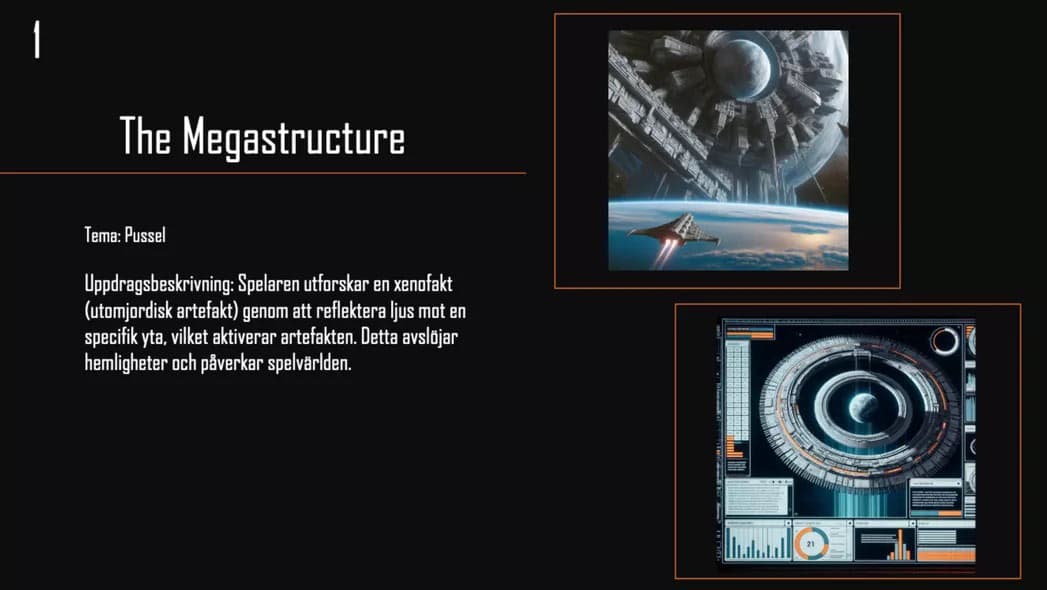
Brief 1: The Megastructure
Theme: Puzzle
The Megastructure
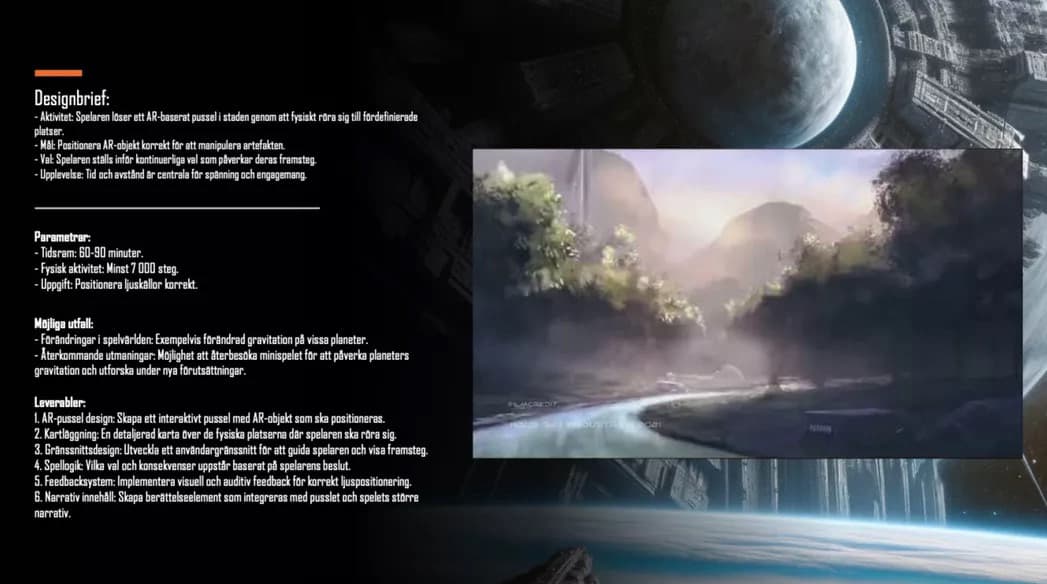
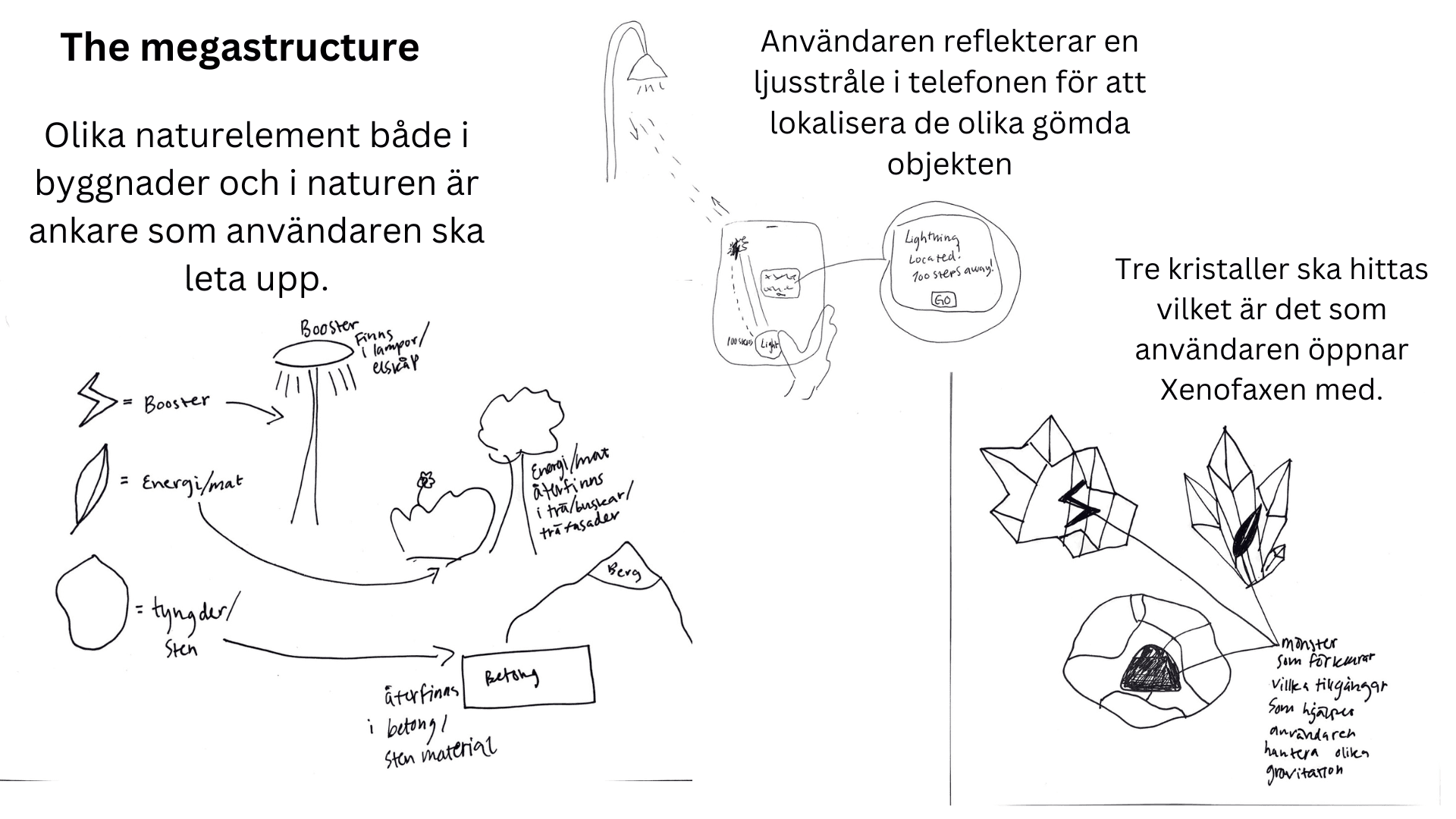
The player solves an AR-based puzzle in the city by physically moving to predefined locations and positioning AR objects correctly to manipulate a xenofact. Players face continuous choices that affect their progress. Time and distance are central to the tension and engagement.
Duration
60–90 minutes
Physical activity
Min. 7,000 steps
Task
Position light sources correctly
Deliverables
1. AR puzzle design: an interactive puzzle with AR objects to be positioned
2. Mapping: a detailed map of physical locations the player moves through
3. UI design: a user interface to guide the player and show progress
4. Game logic: choices and consequences based on player decisions
5. Feedback system: visual and audio feedback for correct light positioning
6. Narrative content: story elements integrated with the puzzle and wider narrative
Brief 2: Space Safari
Theme: Space Safari
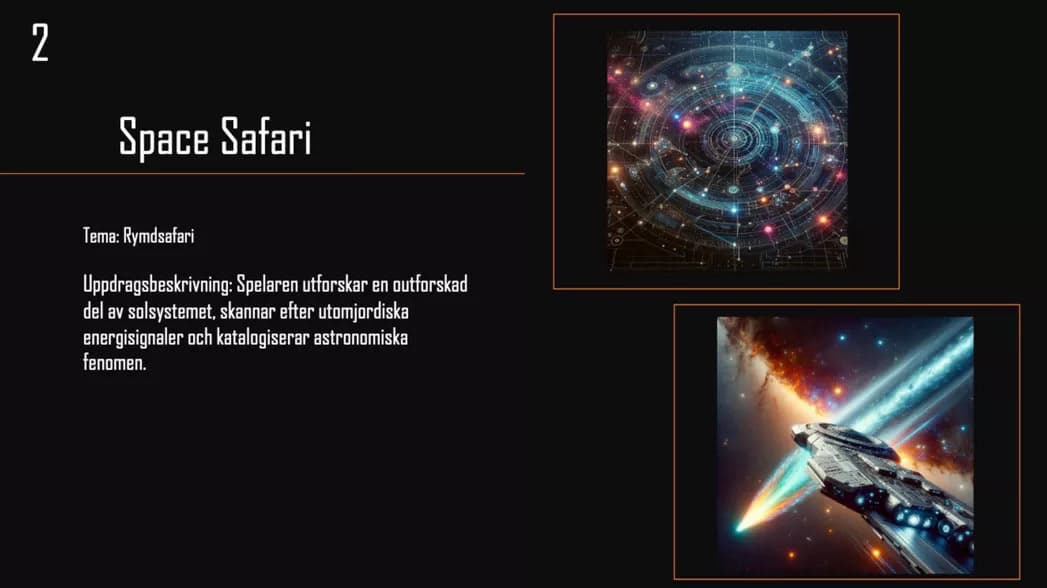
Space Safari
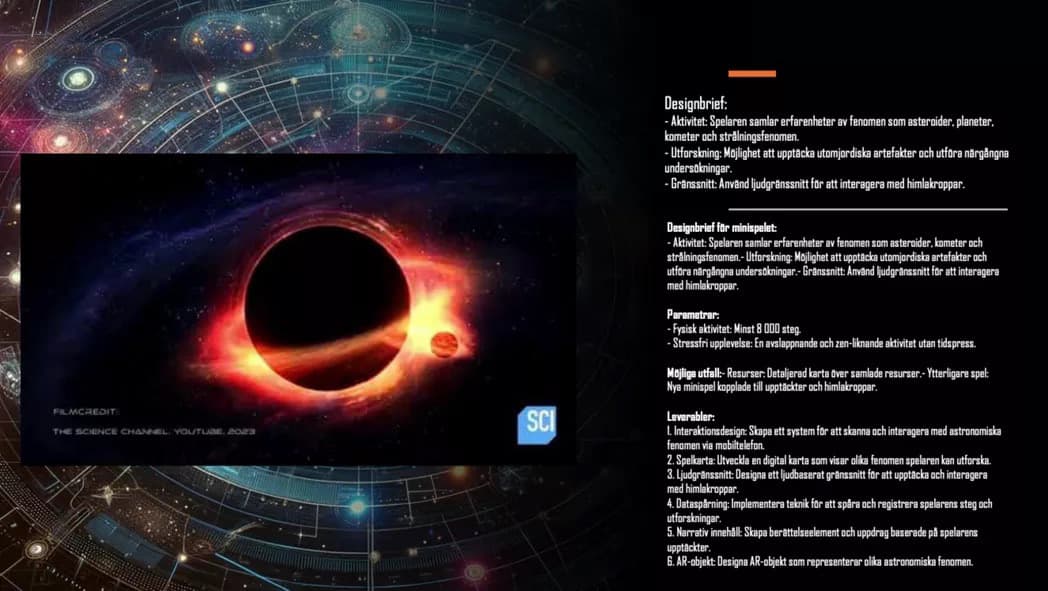
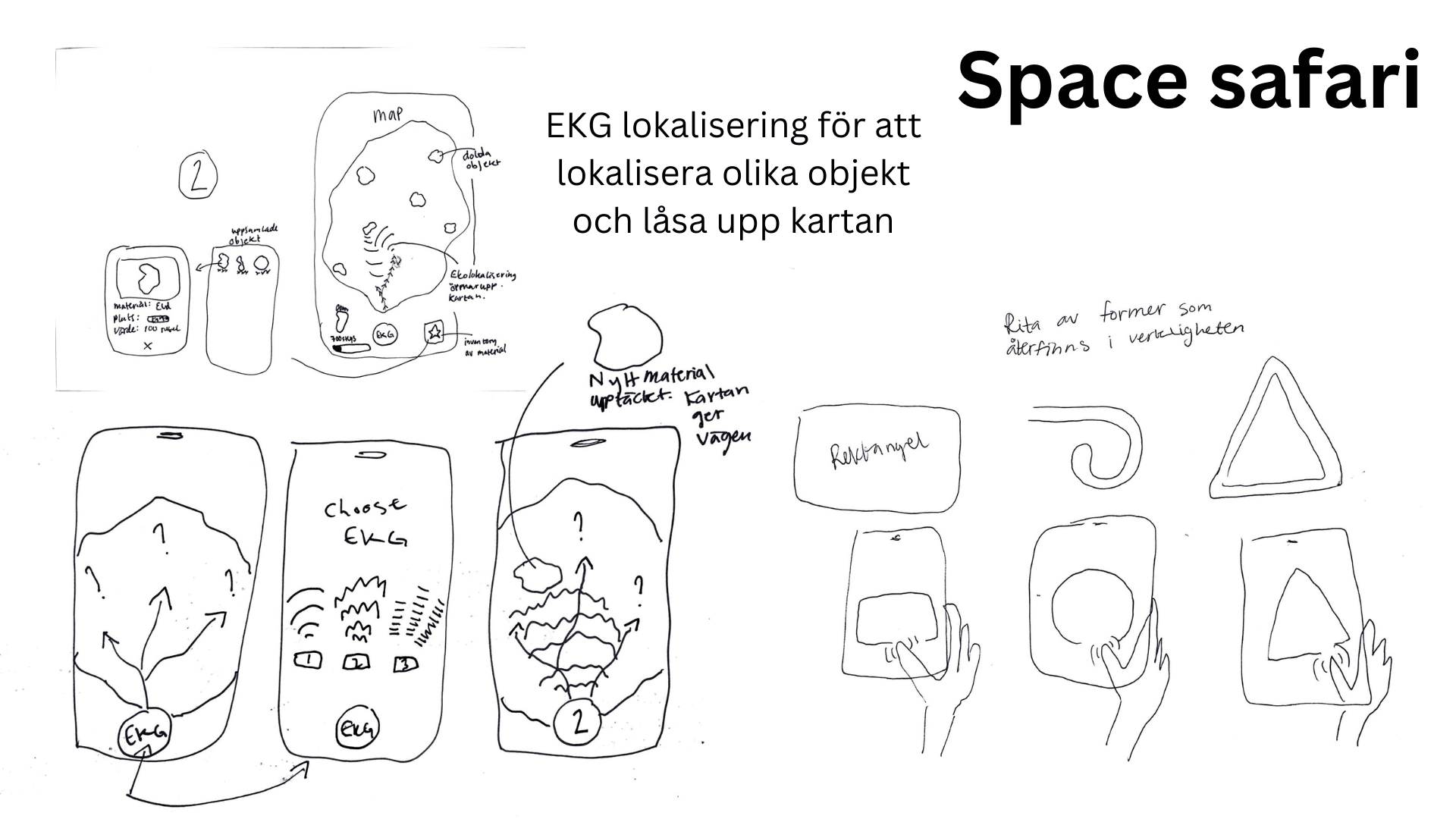
The player collects experiences of phenomena such as asteroids, planets, comets and radiation. They discover extraterrestrial artefacts and perform close-up investigations, using an audio interface to interact with celestial bodies. A stress-free, zen-like activity without time pressure.
Physical activity
Min. 8,000 steps
Experience
Relaxed, no time pressure
Interface
Audio-based interaction
Deliverables
1. Interaction design: a system for scanning and interacting with astronomical phenomena
2. Game map: a digital map showing phenomena the player can explore
3. Audio interface: a sound-based UI for discovering and interacting with celestial bodies
4. Data tracking: technology to track and log the player's steps and discoveries
5. Narrative content: story elements and missions based on the player's discoveries
6. AR objects: AR designs representing various astronomical phenomena
Moodboard
The moodboard was built around the feeling and colour palette intended for the design. Rooted in modern sci-fi with influences from futuristic technology, neon colours against dark backgrounds, and strong contrasts throughout.
Creating the moodboard gave a clear visual reference point to design toward. The key learning: visually representing a cohesive whole across many different elements is harder than it looks. Staying open and playful through the process unlocks creative directions that a more rigid approach would miss.
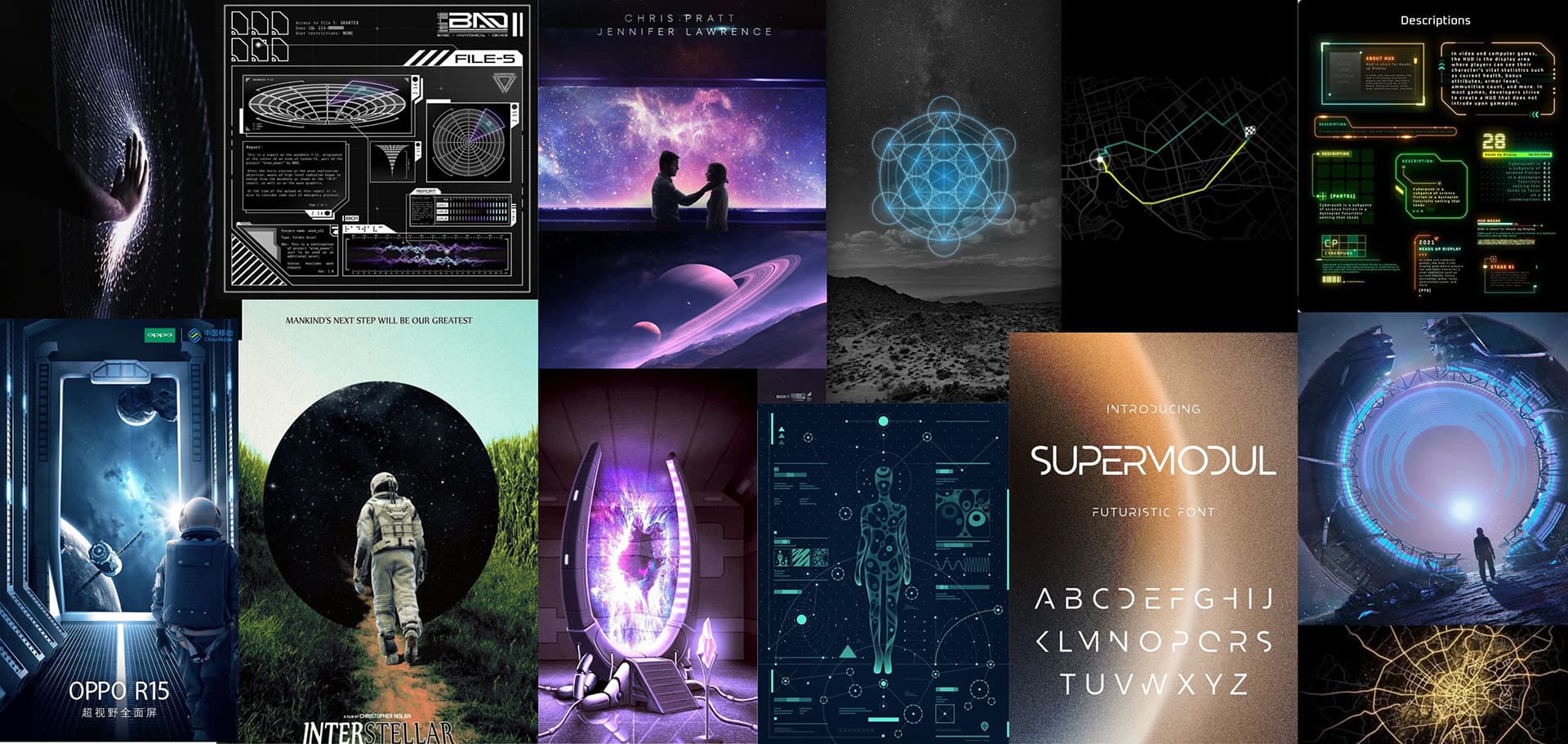
Photo Studio
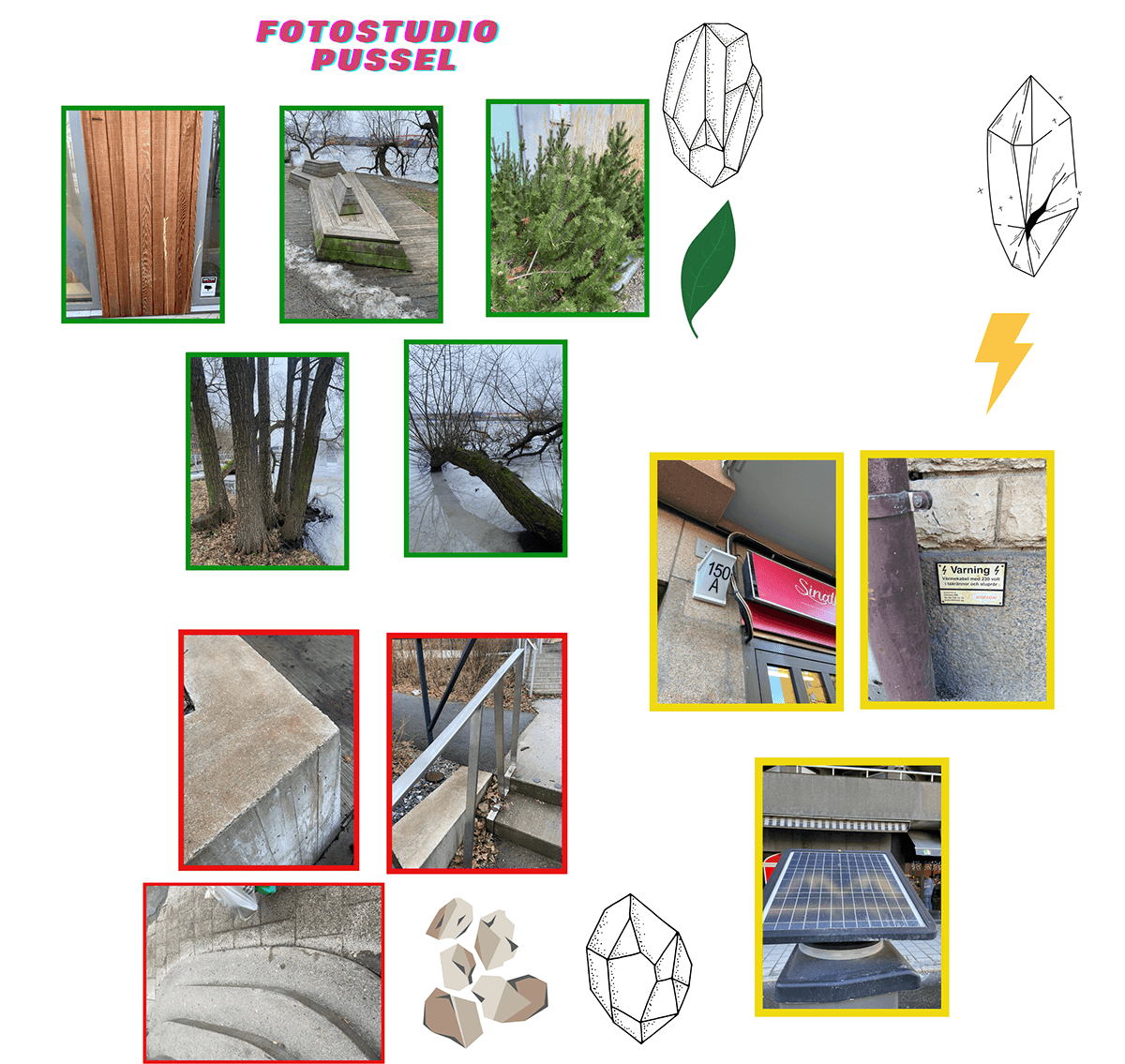
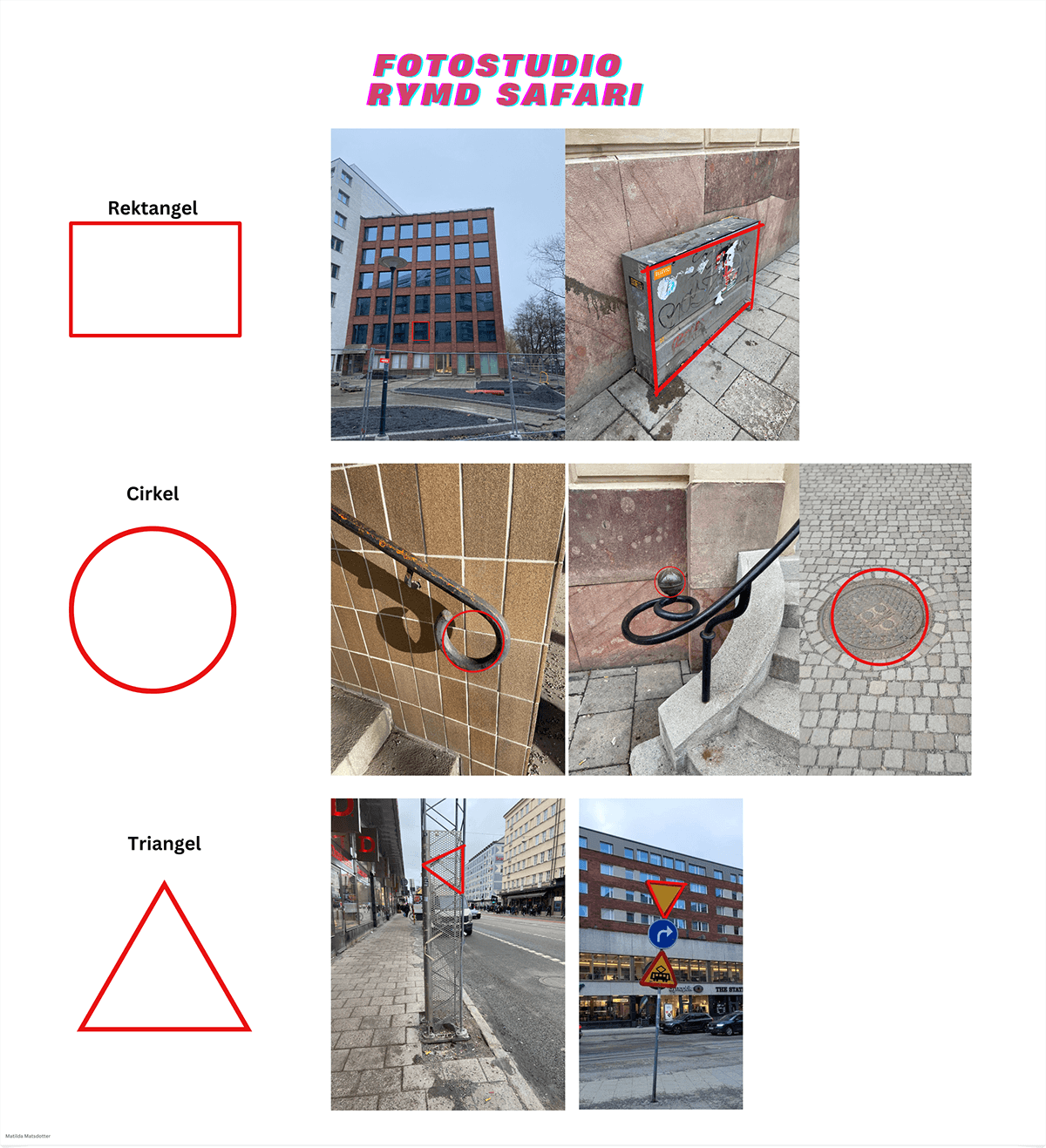
With two concepts selected, the next step was documenting how different game moments could connect to real-world objects. The photo studio sessions surfaced important insights about potential anchors for AR objects within the game.
Key finding: four distinct nature elements could each serve as a collectible resource that players find in their environment. Geometric shapes found in urban spaces also emerged as a mechanism to encourage movement and enable puzzle interactions.
Mindmap
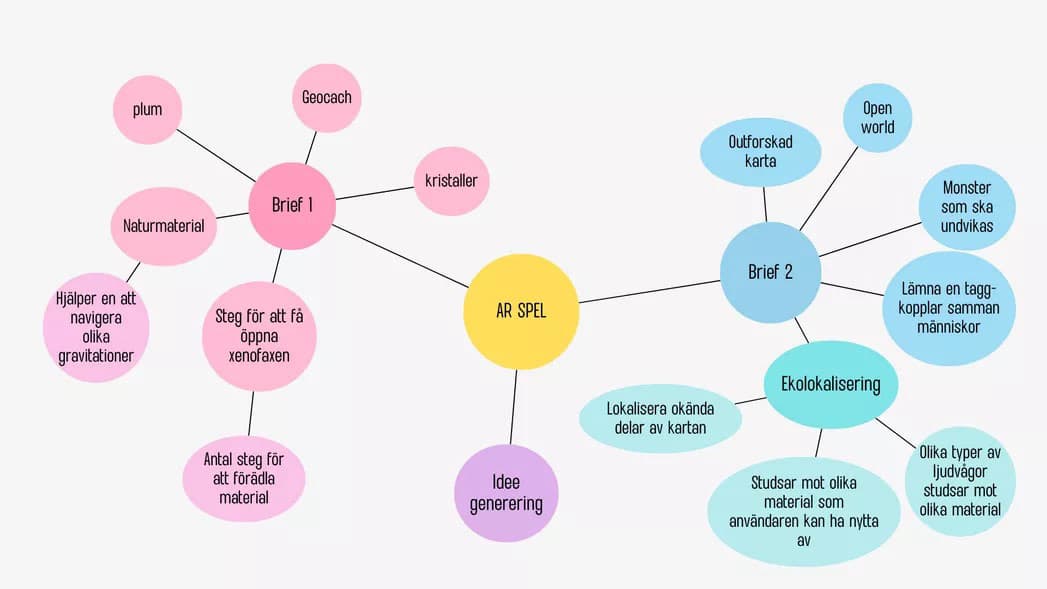
A mindmap was created to map out the connections between the two design concepts, game mechanics, physical interactions, and AR elements. It became a key tool for structuring the design direction before moving into prototyping.
Concept Sketches
The Megastructure
Space Safari
Key Takeaways
01
Brief selection shapes everything
Choosing two briefs over one opened more creative territory and forced early decisions about what made each concept distinct.
02
Moodboards as anchors
Building a visual reference point before sketching made it easier to stay consistent and evaluate new ideas against an established direction.
03
Photo studio as research
Documenting real-world objects and environments surfaced unexpected anchors for AR interaction that sketching alone would not have revealed.